
Learn
How Are Lab-Grown Diamonds Made?
A lab-grown diamond is a real diamond. It shares the exact carbon crystal structure of a mined stone - the only difference is origin. Here is how science recreates the conditions of the earth.
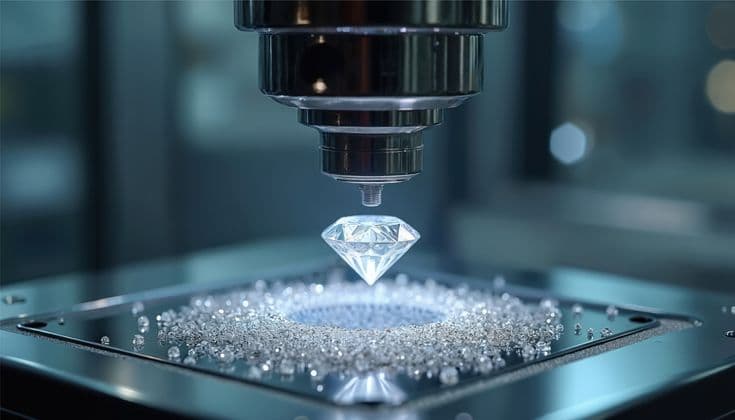
Every diamond - mined or grown - is pure carbon arranged in a precise lattice. In nature this takes one to three billion years under immense heat and pressure deep below the surface. In a laboratory, the same result is achieved in a matter of weeks, using one of two refined methods.
The two ways diamonds are grown

HPHT - High Pressure, High Temperature
A tiny diamond seed is placed with pure carbon and exposed to roughly 1,500°C and pressures above 870,000 psi - mirroring the earth's mantle. The carbon melts and crystallises onto the seed, growing the diamond layer by layer.

CVD - Chemical Vapour Deposition
A seed is placed in a sealed chamber filled with carbon-rich gas. Energised into a plasma, the gas releases carbon atoms that settle onto the seed and build the crystal, atom by atom - allowing exceptional purity and control.
From seed to set stone
The seed
Growth begins with a thin slice of diamond - the foundation the new crystal forms upon.
Growth
Over several weeks, carbon bonds onto the seed under HPHT or CVD conditions to form a rough diamond.
Cutting & polishing
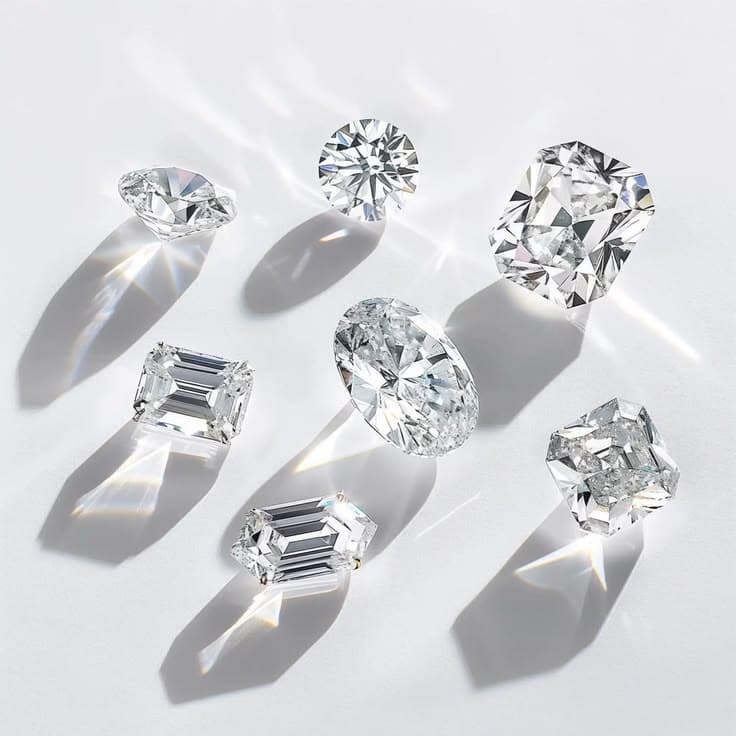
Master cutters shape the rough by hand to reveal its brilliance - exactly as with a mined diamond.
Grading
Each finished stone is independently certified by a laboratory such as GIA or IGI.
“Lab-grown and mined diamonds are identical in chemistry, hardness, sparkle and durability. Only specialised equipment can tell them apart - and only by origin.”
Made to Order
Begin your jewellery enquiry with our concierge
Every piece is created to order. Share your inspiration and our atelier will guide you from first sketch to finished heirloom - personally, over WhatsApp.